Owls Rise: A Summary of Student Protests on Social Justice
This section will focus on student protests around social justice issues, specifically on two events around the LGBT community, one BLM protest and one protest on the name of a building. For the purposes of this page, social justice will be defined as righting the wrongs that have been committed onto a specific community, particularly marginalized communities.
The first protest that will be talked about is a day of silence to bring awareness to the "harassment, bullying and violence" that the LGBT community faces worldwide. While this is not a traditional protest, it still is an act of protest comparable to the famous armbands that were worn by students during the Vietnam War.
The second protest is similarly not a traditional protest, but rather shows extreme backlash to an Anti-LGBT preacher being allowed to speak on campus.
The third protest is one of the many focused on the BLM movement following the death of George Floyd. It focuses on the student organizers and the social aspects on campus.
The final protest focuses on a small group of students who were protesting the naming of a new building on campus in honor of a prison organization known for human rights abuses. Of particular note was the University's response to the protests, and how they had to be taken to court due to unfair punishments that were pushed on the students.
Unfortunately, it seems that most student protests have had little effect on campus decisions either due to limited goals or the university choosing to not factor the protests into decision making.
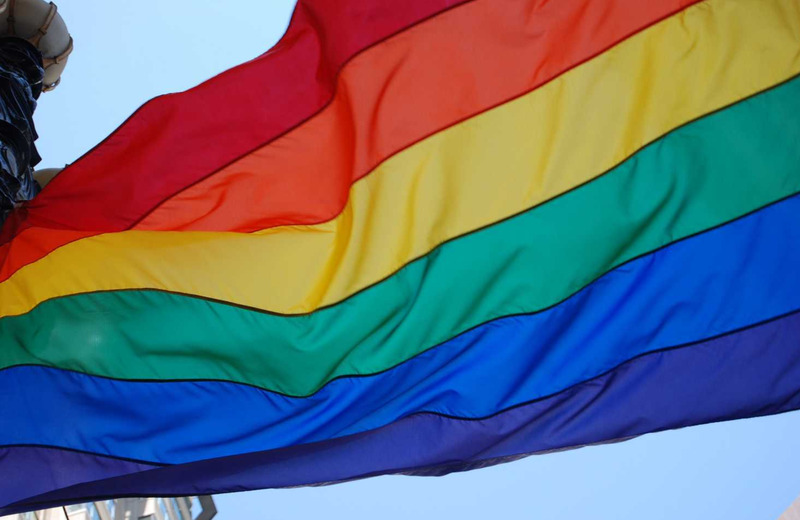
On April 15th, 2016, the Boca Raton FAU campus observed the National Day of Silence in honor of the harrassment and bullying that the LGBT community has faced. Interestingly, the event was not scheduled to go for the full day; rather, it was scheduled to go from 11AM to 2PM. Regardless, the organizer, Andrea Guzman Oliver, stated that there were hopes that students would be silent even outside of this scheduled time. More interesting is the lack of further observations of the day of silence after this one event.
There is little to no information on the impact that this event had. What little information exists was created by Melissa Krupp for the UPress. Unfortunately, such an event likely had little to no impact on any practical decision making. While the silence may have raised awareness, it also would not have been able to disrupt class to the point of being memorable. Furthermore, the small scheduled timeframe shows that the university was able to dominate the conversation around the protest; limiting its impact further. Due to the protest organizers having to limit the time of the silence, likely from university pressure, and the silence itself simply not being particularly memorable, the event is unlikely to have caused an impact on university decision making or have properly raised awareness for such a critical cause. It is worth specifying that part of the lack of impact comes from student perceptions of the event. Put simply, if the population that views the protest does not think that the act will accomplish anything, then the impact of the event is dramatically lessened. According to Fletcher Winston, " Undergraduates become aware of SMOs (Social Movement Organizations) through their social networks, courses or other mechanisms, but take the leap from interest to active involvement depending upon perceptions of a group's potential to ‘make a difference.’". Inversely, if a student does not think the organization is capable of making that difference, then they are less likely to take that leap to active involvement. It is most likely that part of the reason this event is not talked about is that students never believed it would make a change and, therefore, never took that leap into active involvement.
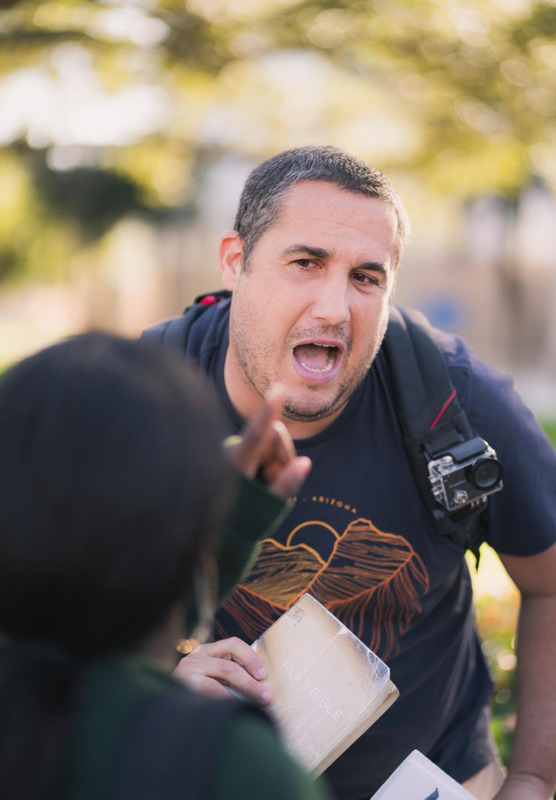
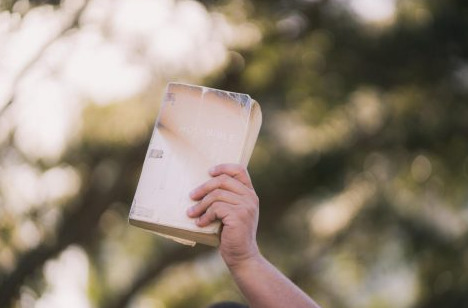
On January 21st, 2020, famous Evangelegist Ken Fleck visited FAU Boca Raton Campus to start preaching. Kendall Little would write about this visit in the UPress. While this itself is not a problem, it still drew massive attention due to the manner that which Fleck was speaking. Many students considered the words he was saying were essentially "hate speech", and a massive crowd of over 40 students gathered around him to try and get him to leave. One student, Coby, said "he's telling people to hate themselves, hate themselves, hate themselves", in reference to Fleck's views on homosexuality being a sin in Christianity. This kind of backlash is rare to see, especially when it takes the form of such a passionate counter to just one man.
Later, on Febuary 2nd 2021, Ken Fleck would once more return to campus. The visit would be covered by Kristen Grau for the UPress. This time, he spoke about the LGBT community and the university's COVID-19 response. Despite the intense backlash he received on his last visit in January 2020, university administrators still allowed him to come speak again. While there is no official documentation as to why the university allowed him to return, it is clear that the crowd that gathered to counter him was not enough to sway the university into saying "no" to Fleck. This gives another unfortunate example of the university not listening to student voices, even if they are unorganized.
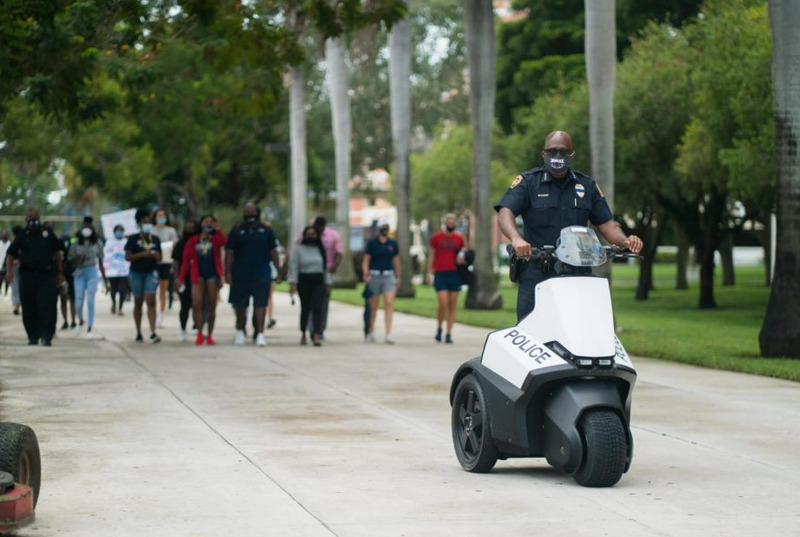
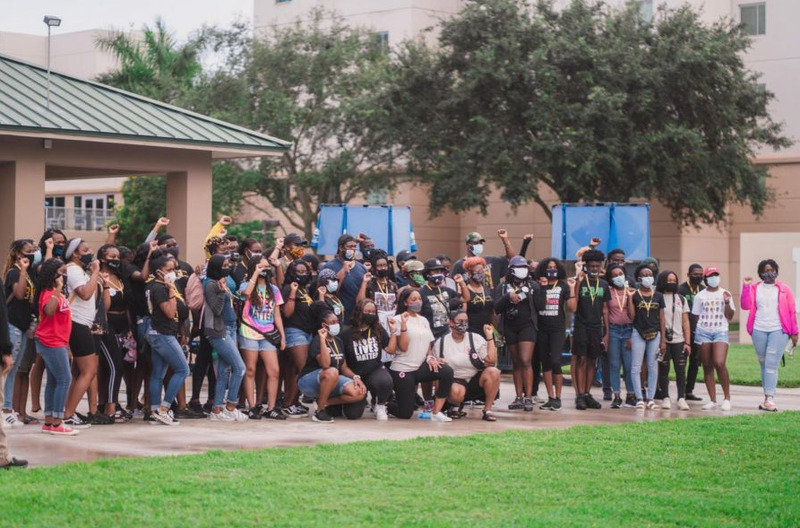
On September 10th, 2020, following the death of George Floyd, a large Black Lives Matter protest was organized by the Black Student Union on FAU Boca Raton Campus that walked along the Breezeway and Opportunity Way. They bore signs claiming "Silence is Violence" and demanded the firing of racist professors across the university, marching across campus. They were led across campus by then campus police chief Sean Brammer, who ensured that the protest did not turn violent, though the protest itself was organized by Kennedy McKinny.
It appears that FAU did not listen to the demands of the students, as there are no documented public firings of university faculty or staff for any reason following the protest. This certainly could be due to the fact there could simply not be any racist faculty or staff, however there is no evidence for this claim. On the other end, there also is no evidence for the claim that there were not any professors who possessed racist beliefs. Regardless, not much changed on campus following the protest, despite how organized and focused the protest was. The university never released a public statement surrounding the protest, however, a few months earlier on July 9th 2020, a student by the name of Irene Gatimi was able to publish an op-ed giving support for the BLM movement. While this does not reflect the university's stance, and this did come before the protest, it does show that the university was not outright entirely silencing the BLM movement at this time. Unfortunately, the university did not listen to the protest; resulting in limited impact.
However, this event is different than the previous two for notable reasons. First and foremost, this was a highly organized and public event; the counter-protest around Fleck and the Day of Silence were either sporadic or poorly planned, limiting their impact. Secondly, this group most certainly believed they could indeed have an impact. Going back to what Fletcher Winston said about students believing in the cause, it is most certain that this group fully believed they could have an impact. While it is unclear if they were able to accomplish their goals, they were able to certainly garner attention and gain the spotlight for a few days, as could be told by the amount of newspapers that wrote about the event in the days following. Put simply, the students believed in the cause; therefore, the cause gained more power than it would otherwise.
Going back a bit, on March 22nd, 2013, on the FAU Jupiter Campus, there was a small protest of 7 students. They organized to voice displeasure over a naming deal for the new football stadium for an organization known as GEO Group; a coporation that owned many prisons and has repeatedly been accused of human rights abuses. This protest was actually successful in its mission, quickly convincing the university to abandon the naming deal and back down. However, what is particularly interesting was the University's response to these students. These seven students, and only them, were called to special "investigative conferences" in regards to the protest. Shortly after, these 7 students reached out to the American Civil Liberties Union who quickly jumped to their defense. It is unclear how the situation was resolved, however, the naming deal never moved forward.
Notably, the university did cave to the students on this protest; in contrast with the three chosen examples that show the university chose to quietly ignore the students. Generally, Florida Atlantic University seems to prefer acting as if student protests do not have influence. However, in this case, the university obviously did choose to listen; though the reason is unclear. Due to the clouded nature of how the situation was resolved, with no public documents to be found, one could only assume as to why the university listened this time.
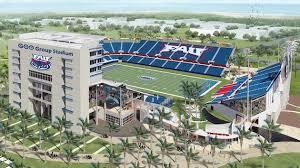
Florida Atlantic University Football Stadium
An arial photograph of the FAU football stadium that originally was to be named for GEO Group.